

 English
 한국어
한국어 Español
Content
- 1 What Is Jogging Fabric?
- 2 How It Works: Fiber Structure and Moisture Management
- 3 Key Properties and What They Actually Mean for the Wearer
- 4 How to Read a Fabric Label
- 5 Jogging Fabric vs. Other Common Fabrics
- 6 Typical Property Ranges in Jogging Fabric
- 7 Real-World Applications Beyond the Running Track
- 8 Common Misconceptions
- 9 Common Fiber Blends and Why They Differ
- 10 A Bit of Background: Why This Fabric Category Exists
- 11 Key Takeaway
- 12 Frequently Asked Questions
- 12.1 What is jogging fabric made of?
- 12.2 How does jogging fabric keep you dry while running?
- 12.3 Is jogging fabric better than cotton for exercise?
- 12.4 What does "moisture-wicking" actually mean?
- 12.5 Can jogging fabric help prevent chafing?
- 12.6 How should jogging fabric be cared for?
- 12.7 What is four-way stretch fabric?
- 12.8 Does a higher fabric weight mean better quality?
Pull on a pair of running tights or a lightweight workout top, and there's a good chance you're wearing a fabric engineered specifically for movement and sweat. That material — often described simply as Jogging Fabric — has quietly become one of the most common textiles in modern wardrobes, showing up not just on running trails but in gyms, airports, and everyday casual outfits. Yet most people who wear it every week couldn't explain what actually makes it different from an ordinary cotton t-shirt.
The gap between "clothing that covers you" and "clothing that actively works with your body" is easy to overlook because both categories often look similar hanging on a rack. It's only once movement, sweat, and temperature enter the picture that the differences become obvious — a plain cotton tee turns heavy and clings to the skin after twenty minutes of jogging, while a shirt built from performance knit barely seems to notice the effort. That contrast isn't an accident of branding; it comes down to measurable, explainable differences in fiber shape, yarn construction, and fabric structure.
This piece breaks down what jogging fabric is, how it works at a fiber level, where it shows up in daily life, and which misconceptions are worth clearing up — all in plain language, without assuming any background in textiles or exercise science. Along the way, it also looks at how to read the specification numbers printed on clothing tags, since those figures often mean more than most shoppers realize.
What Is Jogging Fabric?
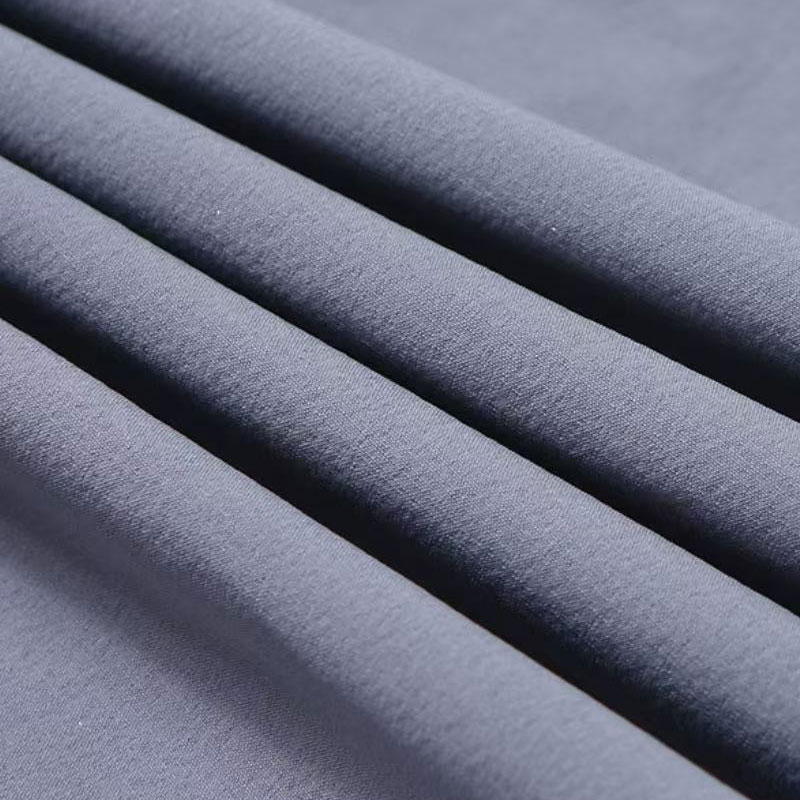
Jogging fabric is a broad term for knitted textiles engineered for physical activity, built to move sweat away from the skin, stretch with the body, and dry quickly after exposure to moisture. It is not one single material but a category, usually built from synthetic fibers such as polyester or nylon, frequently blended with a small percentage of elastane (also sold under the brand name spandex or Lycra) to add stretch.
The defining feature isn't the fiber itself but the combination of fiber choice, yarn shape, and knit construction working together. A cotton t-shirt and a jogging top can technically both be "soft," but they behave completely differently once sweat enters the picture — and that difference is the entire point of the fabric category.
In plain terms: jogging fabric is designed to solve a problem cotton was never built to solve — keeping a moving, sweating body comfortable rather than simply covered.
It's worth noting that "jogging fabric" is a functional category rather than a strict technical standard, meaning there is no single fixed recipe that every manufacturer follows. Two garments both marketed under this general description can differ noticeably in weight, stretch percentage, and finish, depending on whether the intended use is long-distance running, gym training, or simply comfortable daily wear. What ties the category together isn't an exact formula but a shared design goal: manage sweat, allow movement, and recover quickly from repeated stretching and washing.
This distinguishes it from older sportswear approaches that treated "athletic clothing" mainly as a matter of looser cut or thicker material. Jogging fabric instead treats comfort as an engineering problem to be solved at the fiber level, before cut or styling ever come into play.
How It Works: Fiber Structure and Moisture Management
The "magic" of jogging fabric isn't really magic — it's physics, specifically a process called capillary action. Here's the mechanism, step by step:
- Synthetic fibers used in jogging fabric are often shaped with tiny grooves or channels running along their length, rather than being perfectly round like a cotton fiber.
- When sweat touches the fabric, these channels pull moisture along the fiber surface the same way a paper towel draws up a spill, spreading it across a wider area instead of letting it pool.
- Spreading the moisture increases the surface area exposed to air, which speeds up evaporation.
- Because synthetic fibers absorb very little water into the fiber itself (unlike cotton, which soaks moisture in and holds onto it), the fabric surface dries fast rather than staying damp.
- The knit structure — typically a looser, more open weave than a dress shirt — adds ventilation channels that let body heat and humid air escape.
This is why a cotton shirt feels heavy and clingy after a run while a jogging top feels comparatively dry: cotton fibers absorb sweat and swell, holding the moisture against the skin, while jogging fabric fibers move moisture to the surface and let it evaporate.
The stretch component works on a separate principle. Elastane fibers are essentially long coiled polymer chains that can stretch to several times their resting length and snap back into shape. Blended at typically 5 to 20 percent of the fabric, elastane gives jogging fabric what's known as four-way stretch — the ability to flex both lengthwise and widthwise — which matters for movements like a running stride or a deep squat that a rigid fabric would restrict.
Temperature regulation adds a third layer to the picture. As sweat evaporates from the fabric surface, it carries heat away from the body in the process — the same cooling effect that makes a wet hand feel cold in a breeze. Because jogging fabric is engineered to speed up evaporation rather than trap moisture, it effectively helps the body's own cooling system work more efficiently, rather than adding an extra layer of trapped heat and dampness on top of it.
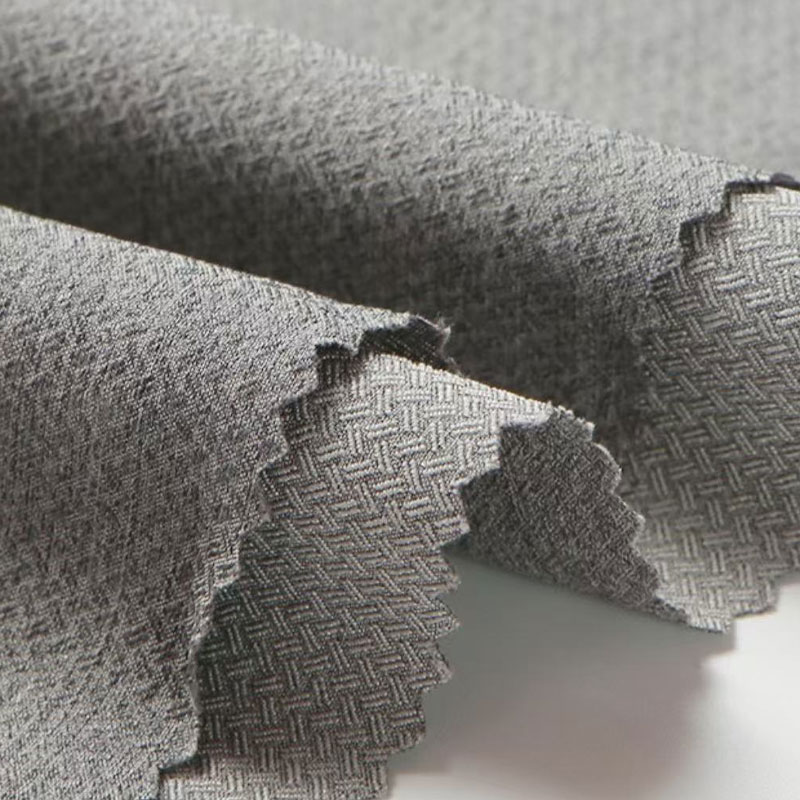
Knit density plays a supporting role in this process as well. A tighter knit slows air exchange but offers more coverage and slightly more wind resistance, while a looser, more open knit maximizes airflow at the cost of some structure. Manufacturers balance this trade-off depending on whether a garment is meant for high-intensity training, where airflow matters most, or for lighter daily wear, where a bit more structure and opacity is often preferred.
Key Properties and What They Actually Mean for the Wearer
Manufacturers and product labels often list fabric properties using technical shorthand. Here's what each one means in practical terms:
- Moisture-wicking — moves sweat from the skin to the fabric surface for faster evaporation, so clothing feels drier during activity.
- Breathability — how easily air passes through the fabric structure, affecting how quickly built-up heat and humidity escape.
- GSM (grams per square meter) — a measure of fabric weight and density; lower GSM generally means lighter, more breathable fabric suited to warm-weather activity, while higher GSM offers more coverage and durability.
- Four-way stretch — fabric that stretches and recovers in both directions, allowing a fuller range of motion without restriction.
- Recovery — how well a stretched fabric returns to its original shape; poor recovery leads to baggy knees or sagging after repeated wear.
- Odor resistance — often achieved through fiber treatments or blend choices that limit the bacterial growth responsible for post-workout smell.
None of these properties exist in isolation — a fabric optimized purely for breathability, for example, may sacrifice some durability, which is why most jogging fabric represents a deliberate balance rather than a maximum score on any single trait. Reading these properties together, rather than focusing on any single number, tends to give a much more realistic sense of how a garment will actually perform once it's out of the packaging and into regular use.
How to Read a Fabric Label
Clothing tags often list a string of numbers and percentages that mean little without context. Understanding a few of them makes it far easier to judge whether a garment will suit a particular activity before ever trying it on.
The fiber content line — something like "88% polyester, 12% elastane" — is the starting point. A higher elastane percentage generally signals more stretch and a closer, more supportive fit, which is common in leggings and compression-style tops. A lower elastane percentage trades some stretch for a lighter, more relaxed feel, which is more typical of loose training tees or casual Jogging Fabric tops meant for everyday wear rather than intense training.
Weight, usually listed in GSM, indicates how substantial the fabric feels and how much coverage it offers. Lighter GSM fabrics are typically chosen for hot-weather or high-output activities where minimizing heat retention matters most, while heavier GSM fabrics tend to show up in cooler-weather layers or garments designed to hold their shape under repeated stretching.
Finally, care instructions matter more for this fabric family than many shoppers expect. Because elastane is sensitive to heat, labels recommending cold water washing and low-heat or air drying aren't arbitrary — they exist specifically to protect the stretch and recovery properties that make the fabric useful in the first place.
Jogging Fabric vs. Other Common Fabrics
It helps to see how jogging fabric compares directly against materials people already know well.
| Fabric | Primary Fiber | Moisture Handling | Stretch | Best Suited For |
|---|---|---|---|---|
| Jogging Fabric | Polyester/nylon + elastane blend | Wicks sweat to surface, dries fast | High (four-way) | Running, training, active daily wear |
| Cotton | Natural cellulose fiber | Absorbs and holds moisture | Low to none | Casual wear, low-sweat settings |
| Fleece | Brushed polyester | Traps warm air, moderate wicking | Low | Insulation, cold-weather layering |
| Compression Knit | Nylon + high elastane ratio | Wicks moisture, tighter fit | Very high, firm recovery | Muscle support, recovery wear |
The comparison highlights why jogging fabric occupies a middle ground: it stretches more than cotton but less aggressively than compression knit, and it manages moisture more actively than fleece, which is built primarily for warmth rather than cooling.
Typical Property Ranges in Jogging Fabric
Specification sheets for this fabric category commonly reference a set range of values. The table below translates typical ranges into what they mean in practice.
| Property | Typical Range | Practical Effect |
|---|---|---|
| Fabric Weight | 140–220 GSM | Lighter end suits hot climates; heavier end adds coverage and durability |
| Elastane Content | 5–20% | Higher percentage means more stretch and closer fit |
| Drying Time (air-dry) | Under 1 hour | Significantly faster than cotton, which can take several hours |
| Stretch Recovery | 90%+ shape retention | Resists sagging or bagging after repeated stretching |
Real-World Applications Beyond the Running Track
Although the name suggests a single use case, this fabric family shows up in far more places than running gear:
- Leggings and joggers — the most direct application, where stretch and breathability support a full range of motion.
- Athleisure clothing — casual pieces designed to look everyday but perform like activewear, worn well beyond the gym.
- Travel clothing — stretch and quick-drying properties make it popular for long flights and trips where comfort and easy care matter.
- Studio and yoga wear — where breathability and freedom of movement take priority over structure.
- Base layers — worn under heavier clothing in cooler conditions, relying on moisture management to keep the skin dry beneath insulating layers.
- Sleepwear and loungewear — some brands now use lightweight, breathable performance knits in nightwear, where temperature regulation through the night matters as much as it does during a workout.
- Uniforms and workwear — professions that involve standing, walking, or physical activity for long shifts increasingly borrow moisture-managing fabric for the same comfort reasons athletes rely on it.
This crossover between performance and everyday wear is part of why jogging fabric has become common in casual clothing lines that have nothing to do with formal athletics — comfort-driven consumers have simply adopted performance textiles for daily life. What began as a niche solution for competitive runners has, over roughly two decades, become a mainstream expectation for how comfortable clothing should perform, not just how it should look.
This shift also explains why the line between "activewear" and "everyday wear" has blurred so significantly in recent years. A pair of joggers built from this fabric family can move seamlessly from a training session to a coffee run to a long flight, without the wearer needing to change outfits for each context — a practical convenience that has done as much to drive adoption as any performance benefit on its own.
Common Misconceptions
A few ideas about this fabric persist despite not holding up well:
- "Moisture-wicking fabric absorbs sweat." It actually does close to the opposite — it resists absorbing moisture into the fiber itself and instead moves it along the surface for faster evaporation.
- "Heavier fabric is always more durable." Weight (GSM) affects feel and coverage, but durability depends more on fiber quality, knit tightness, and finishing than on weight alone.
- "All stretch fabric is the same." Stretch percentage and recovery quality vary widely; a fabric can stretch a lot but recover poorly, leading to a saggy fit over time.
- "Synthetic automatically means less breathable than cotton." Breathability comes primarily from knit structure and fiber shape, not simply from being synthetic or natural — many synthetic knits outperform cotton in active conditions specifically because cotton's absorbency works against airflow once it's wet.
- "More expensive always means better performance." Price often reflects brand positioning, styling, and finishing details as much as raw fabric performance; two garments with nearly identical fiber blends and GSM can perform very similarly despite a large price gap.
- "One fabric works for every activity." A fabric optimized for high-intensity interval training, where airflow is the priority, isn't necessarily the best choice for a cold-weather long run, where some heat retention becomes more valuable — matching fabric weight and structure to the activity matters more than chasing a single "best" option.
Common Fiber Blends and Why They Differ
Not all jogging fabric blends are built for the same purpose, and understanding the most common combinations helps explain why two seemingly similar garments can feel quite different in practice.
- Polyester-elastane blends are among the most widespread, valued for quick drying, colorfastness, and relatively low cost, making them common in mainstream training tops and leggings.
- Nylon-elastane blends tend to feel smoother against the skin and offer slightly more stretch resilience, which is part of why they show up frequently in compression-style garments and higher-end activewear.
- Recycled polyester blends use fiber reprocessed from post-consumer plastic, offering similar performance characteristics to virgin polyester while reducing reliance on new raw material — a growing choice as manufacturers respond to demand for lower-impact production.
- Blends with small natural-fiber additions, such as a minority share of modal or bamboo-derived fiber, are sometimes used to add extra softness against the skin, usually at some cost to overall quick-dry performance.
None of these blends is universally "best" — the right choice depends on whether the priority is maximum quick-dry performance, softness, cost, or environmental footprint, and most manufacturers select a blend ratio based on the specific garment's intended use rather than a single ideal formula.
A Bit of Background: Why This Fabric Category Exists
Performance textiles took off from the mid-20th century onward as synthetic fiber production matured and sportswear moved from simple cotton blends toward materials engineered around specific physical demands. Early synthetic sportswear solved for durability and stretch but often struggled with breathability and trapped heat. Over subsequent decades, fiber engineering — including cross-sectional fiber shaping and refined knit construction — closed that gap, producing fabrics that manage moisture actively rather than simply resisting it.
That history matters because it explains why jogging fabric looks the way it does today: it's the product of decades of incremental refinement aimed at a very specific, practical goal — keeping a moving body comfortable — rather than a single invention.
It also explains why the category continues to evolve rather than settling into a fixed standard. As fiber manufacturing techniques improve and consumer expectations shift toward more sustainable production, blend ratios, finishing treatments, and even the shapes of individual fibers keep being adjusted in small ways, each aimed at squeezing out a little more comfort, durability, or reduced environmental impact without sacrificing the core moisture-management function the fabric was built around in the first place.
Key Takeaway
Jogging Fabric earns its place in modern wardrobes not through marketing but through a genuinely different set of physical properties: fiber shapes that pull moisture outward, knit structures that let air move freely, and elastane blends that flex with the body instead of restricting it. Understanding those mechanics makes it easier to read a clothing label with more confidence — and to recognize why a simple change in fabric can make such a noticeable difference between a shirt that clings uncomfortably and one that barely feels like it's there.
Frequently Asked Questions
What is jogging fabric made of?
It is typically a knit blend of synthetic fibers such as polyester or nylon combined with a smaller percentage of elastane for stretch, though exact blends vary by manufacturer and intended use.
How does jogging fabric keep you dry while running?
Fiber shape and knit structure pull sweat away from the skin toward the fabric's outer surface, where increased surface area allows faster evaporation compared with fabrics that absorb moisture internally.
Is jogging fabric better than cotton for exercise?
For sweat-heavy activity, most people find synthetic jogging fabric more comfortable because it dries faster and avoids the heaviness cotton develops once saturated with sweat; for low-intensity, low-sweat settings, the difference matters less.
What does "moisture-wicking" actually mean?
It describes a fabric's ability to move moisture away from the skin to the fabric's surface, rather than absorbing and holding it, so sweat can evaporate more quickly.
Can jogging fabric help prevent chafing?
Its smooth, moisture-managing surface reduces the friction and dampness that commonly cause chafing, though fit and seam design also play a significant role.
How should jogging fabric be cared for?
Cold water washing and air drying generally preserve elastane's stretch and recovery longer than high heat, which can break down elastic fibers over repeated cycles.
What is four-way stretch fabric?
It refers to fabric that stretches in both the lengthwise and widthwise directions, rather than just one, allowing for a fuller range of motion during activities like running, squatting, or reaching overhead.
Does a higher fabric weight mean better quality?
Not necessarily — weight mainly affects warmth, coverage, and opacity, while quality depends more on fiber consistency, knit construction, and finishing, so a lighter fabric can still be high quality and a heavier one can still wear out quickly if poorly constructed.